

Whether you are using ChatGPT (GPT-5), DeepSeek, or Claude, you might have noticed a subtle decline in intelligence during extended sessions. Recent scientific research confirms this intuition: even the most advanced AI models suffer significant performance degradation in long conversations.
The Research: Longer Chats, Lower Accuracy
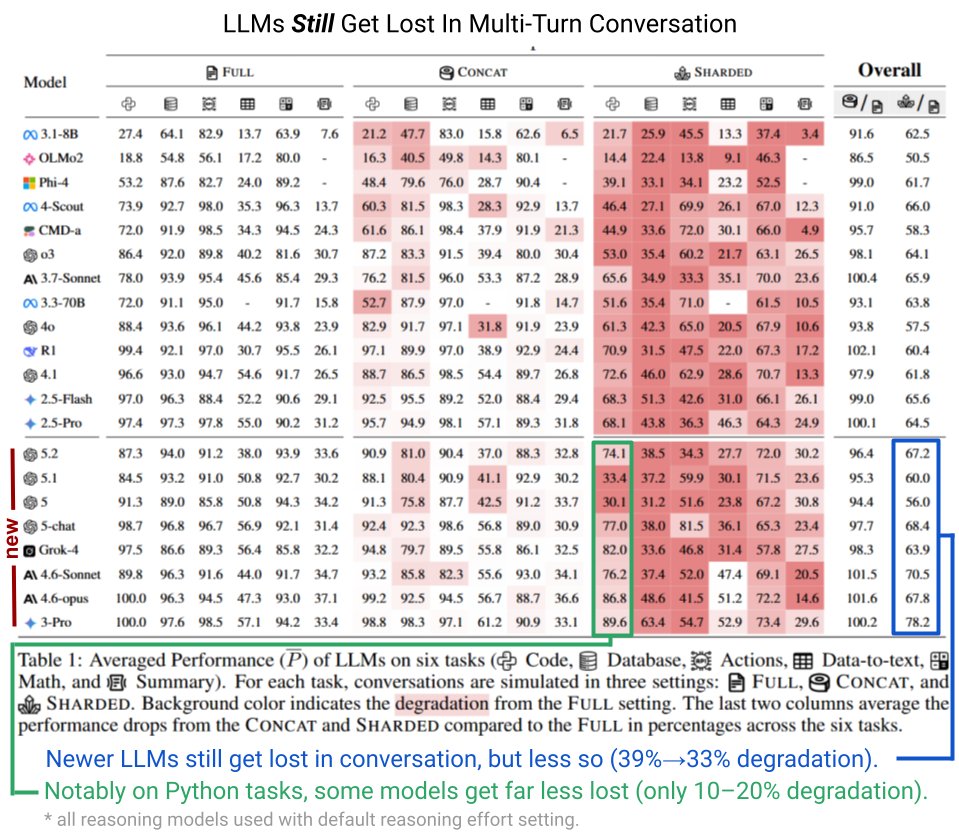
Researcher Philippe Laban and his team recently conducted in-depth stress tests on the latest generation of Large Language Models (LLMs). The study covered six key domains: coding, database querying, math, and summarization. The results were startling: accuracy dropped by up to 33% when task-relevant information was spread across multiple turns (sharding) rather than a single prompt.

Why Does This Happen?
Despite modern models having massive context windows, “remembering” data isn”t the same as “understanding” it in context. As dialogue grows, background noise accumulates. When information is sharded across messages, the model”s logical reasoning is disrupted. Interestingly, technical tweaks like lowering temperature values do not solve this underlying architectural flaw.
3 Practical Tips to Keep Your AI Smart
- Start Fresh Often: Avoid keeping a single chat window open all day. Initiate a “New Chat” whenever a topic shifts or a task enters a new phase.
- The Summary Inheritance Method: Before starting a new chat, ask the AI to summarize all key conclusions from the current session. Paste this summary as the first prompt in your new window.
- Prioritize Single-Prompt Input: Try to provide all necessary background information in one go rather than drip-feeding details across five separate messages.
Conclusion
AI performance is dynamic, not static. Understanding these limitations is key to maintaining high productivity in 2026. Keep your conversation windows “fresh” to ensure the best results.
💡 Featured AI Tools
- OpenAI (ChatGPT) – View Details
- AI Tools Navigator – Explore More
For more deep dives into global tech trends, stay tuned to smdhb.com.